Standard banner sizes by type
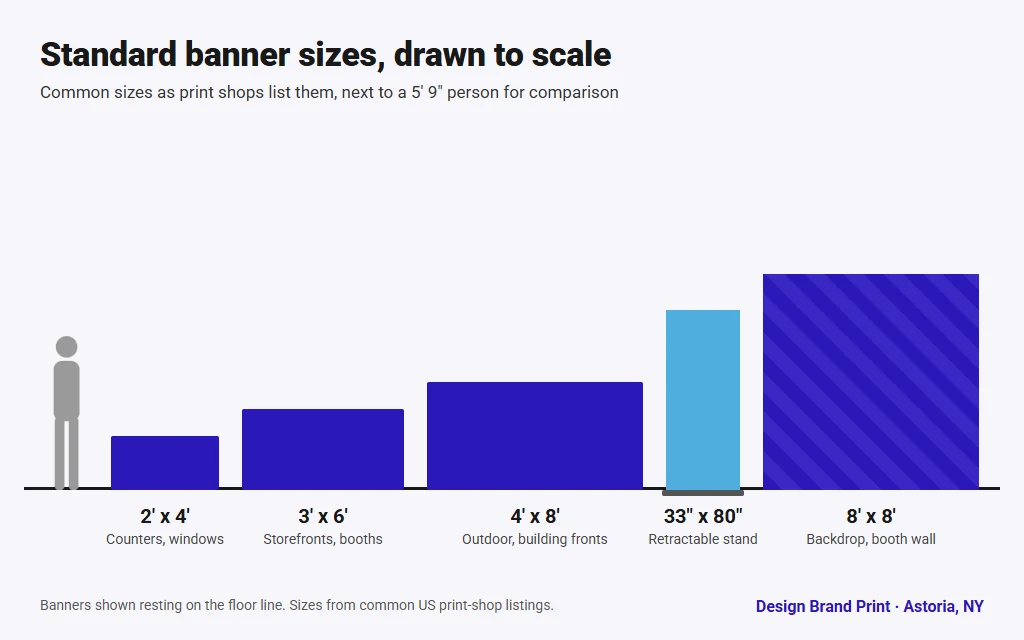
Banner type | Common sizes | Where it fits |
Small vinyl | 2′ x 4′ (24″ x 48″), 2′ x 6′ (24″ x 72″) | Counters, inside windows, indoor directions |
Medium vinyl | 3′ x 6′ (36″ x 72″), 4′ x 6′ (48″ x 72″) | Storefronts, event booths, fences people walk past |
Large vinyl | 4′ x 8′ (48″ x 96″), 4′ x 10′ (48″ x 120″), 5′ x 10′ (60″ x 120″) | Building fronts, outdoor events, long fence runs |
Mesh | The same sizes as vinyl | Chain-link fences, scaffolds, windy corners |
Retractable stand | About 33″ x 80″, also 24″ and 47″ wide | Trade show booths, conferences, lobbies |
Backdrop | 8′ x 8′ and larger | Photo walls, stage backdrops, booth back walls |
NYC street-pole banner | 3′ x 8′ vertical only | Lampposts under a city permit |
Backdrops for red carpets and press walls have their own frames and sizes, which we cover in our guide to step and repeat banners.
How to choose the right banner size
Measure your space before you look at a size chart: the wall, window, fence or booth where the banner goes up. Then take 6 to 12 inches off each side for the grommets, zip ties or stand that hold it up. Our page on UV-printed banners explains the finishing options, from grommets to pole pockets.
Next, work out the reading distance. Printers go by a simple rule of thumb: one inch of letter height per 10 feet of distance. Letters 3 inches tall read from about 30 feet. A banner seen from 100 feet away needs letters about 10 inches tall. The banner has to be big enough to hold your main line at that letter height with space around it.
Indoors and outdoors call for different sizes. Inside a shop, a lobby or an event hall, people stand a few feet away, and the wall space or the venue’s rules usually cap the size. Outdoors, a banner has to reach drivers and people across the street, so it needs to be larger. The vinyl also has to stand up to sun, rain and wind.
Then count what you want to say. A 2′ x 4′ holds a logo and a short tagline. Once the banner also carries a phone number, a web address, an offer and a deadline, step up to 3′ x 6′ or larger so each line stays readable.
Orientation comes last: horizontal banners suit storefronts, fence runs and event tables, while vertical ones suit narrow walls, light poles and retractable stands.
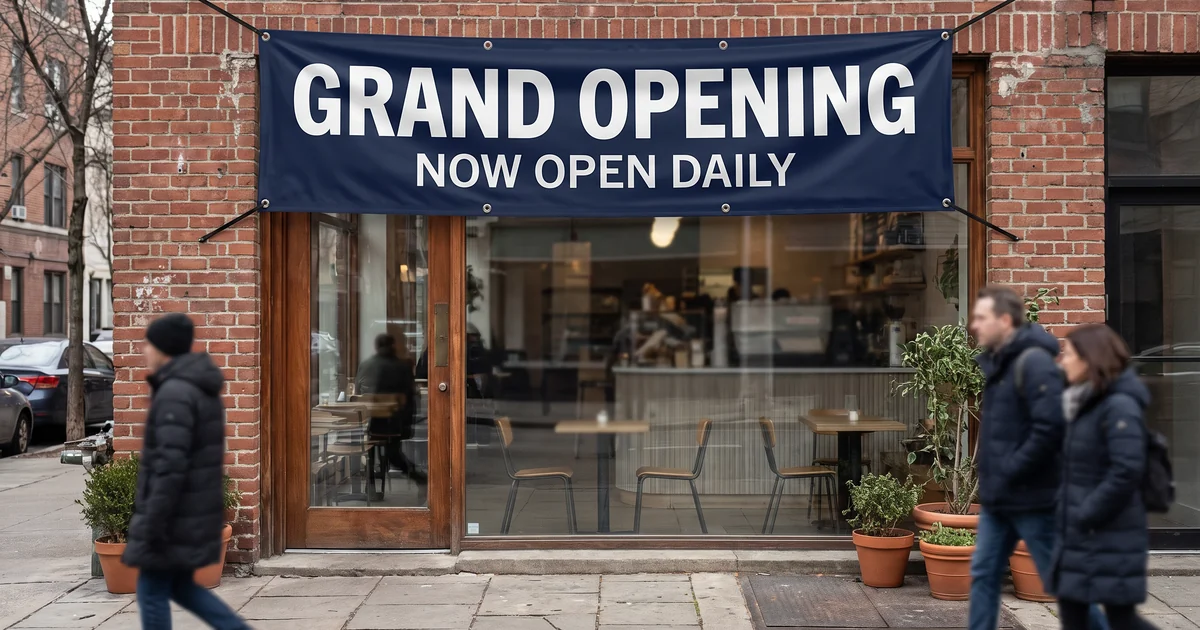
Take a cafe that wants a grand-opening banner on its storefront, read by people across the avenue about 40 feet away. At one inch per 10 feet, the main line needs letters at least 4 inches tall. Two lines at that height plus the space between and around them fit on a 3′ x 6′ with room to spare. A 4′ x 8′ gives each line its own space if the owner also wants the phone number and the opening date. The cafe still has to check the city’s sign rules before the banner goes up, which we explain below.
Why retractable banner sizes never quite match
Retractable banners do not come in one standard size. Depending on the stand, the print might be 33.5″ x 80″, 33.5″ x 79″, 33″ x 81″ or about 33″ x 80″.
The sizes differ because each stand model takes a graphic cut to its own hardware, so a print made for one stand will not always fit another.
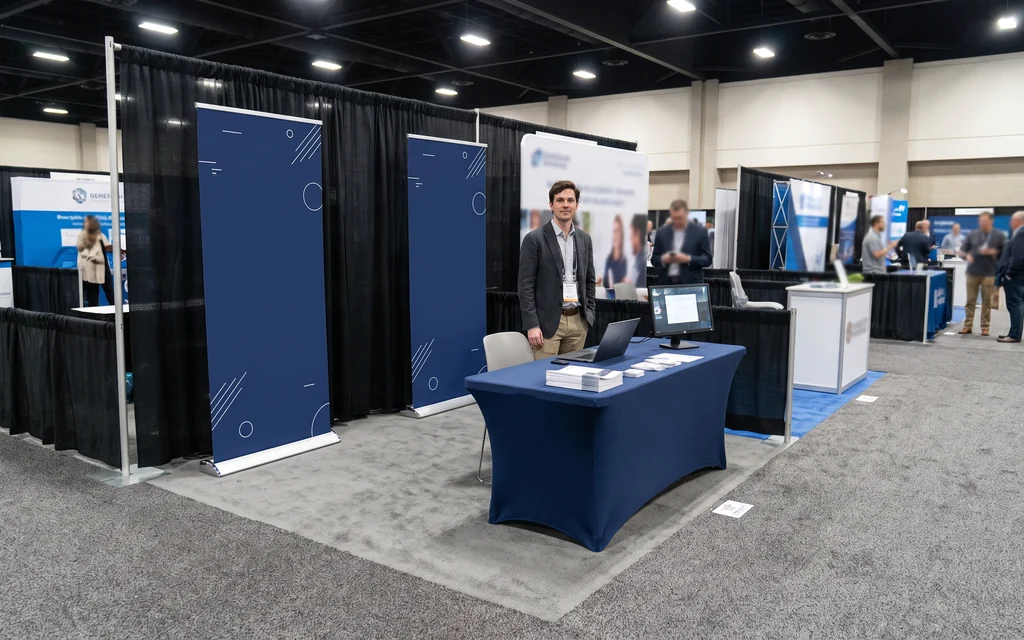
Wider and narrower stands exist too. A 24-inch stand fits a tight space, and a 47-inch stand gives a wider display at about the same height. In a 10′ x 10′ booth, two 33-inch stands usually fit with space left for a demo table. At a ballroom job fair where each employer gets a 6-foot table, there is often room behind it for one 33-inch stand. In a narrow aisle, such as at a college career day, the 24-inch stand helps keep the walkway clear.
So pick the stand first, then design to its template. Already own a stand? Give the printer its make and model or measure the graphic that is in it now. We print retractable banners and supply the stands, and you can see them alongside our other signage and displays.
NYC rules on where a banner can hang
In New York City, where the banner goes also sets limits on its size.
The city’s Zoning Resolution counts a banner or a pennant as a sign. The Department of Buildings does not require a permit for a wall sign of 6 square feet or less. A 3′ x 6′ banner is 18 square feet, three times that. Even a sign under 6 square feet still has to follow zoning and the city’s other rules. Before the banner goes on the outside of your building, ask the Department of Buildings or whoever installs it whether you need a permit. Size also decides who may hang it. Without a licensed sign hanger, you can only hang signs up to 75 square feet and 25 pounds, with a few exceptions.
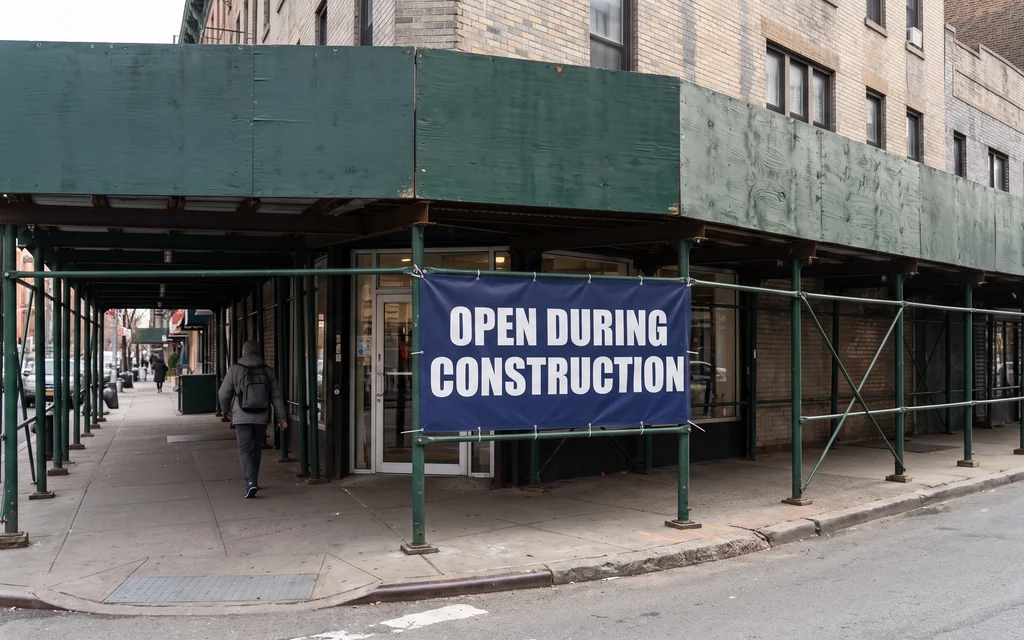
Scaffolding has its own rule. The Building Code bans business and advertising messages on sidewalk sheds, scaffolds and construction fences. The exception is a storefront that the structure hides. You may post a temporary business sign directly in front of it, up to 4 feet high and not above the shed’s parapet. A sign that stays up for more than 30 days needs a permit. A 3′ x 6′ banner hung horizontally fits under that limit, and a 4′ x 8′ sits right at it.
Lampposts belong to the Department of Transportation. Street-pole banners must be vertical, 3 feet wide by 8 feet long, with six wind slits, and hung at least 18 feet above the road. They cannot carry advertisements, and sponsor names or logos can take up no more than 10% of the banner. So you cannot use a lamppost banner to advertise a store’s sale.
Wind is the other city factor. On fences, scaffolds and open corners, printers recommend mesh. It comes in the same sizes as solid vinyl, but its tiny holes let the wind pass through.
Custom sizes, seams and the file you send
Standard sizes are a good place to start, but you do not have to use one. If your space calls for a 7-foot banner, a banner cut to 7 feet will usually look better than the nearest standard size. We print custom sizes.
Very large banners may be printed in panels and joined. Where a seam falls depends on the printer’s equipment, so in a big order ask where it will be before you approve the proof.
For the artwork, a vector file is best because it keeps its sharp edges at any size. We accept PDF, AI, PSD and EPS files. Our design team can also build the banner with you if you do not have artwork yet.
Ask us for a quote on banner printing in NYC once you know the size, or ask us to help you choose one. You can pick up your banner at our shop at 21-34 Broadway in Astoria. We can also deliver it across the city, including to trade show venues. And when you call or email us, you talk to a person, not a robot.
Banner size questions
What is the most common banner size?
The 3′ x 6′. It has room for a logo, a headline and your contact details, and it suits most storefronts and event booths.
What size banner do I need for a 10×10 trade show booth?
An 8′ x 8′ back wall is the usual fit because it leaves about a foot clear on each side. Check your show’s exhibitor manual too, because venues set their own limits. Our trade show printing page lists what else we make for a booth.
What size banner works for outdoor advertising?
The 4′ x 8′ is the usual pick outdoors. Go bigger when your letters need more room at the distance people read from.
What resolution does a 4×6 banner file need?
We ask for a vector file. If you only have an image, send it at 300 dpi at the printed size.